May 14, 2026
ICTOP Webinar, May 13. Stories that Endure: The Role of Media in Preserving Culture & Revealing Shared Heritages in Kenya and Korea
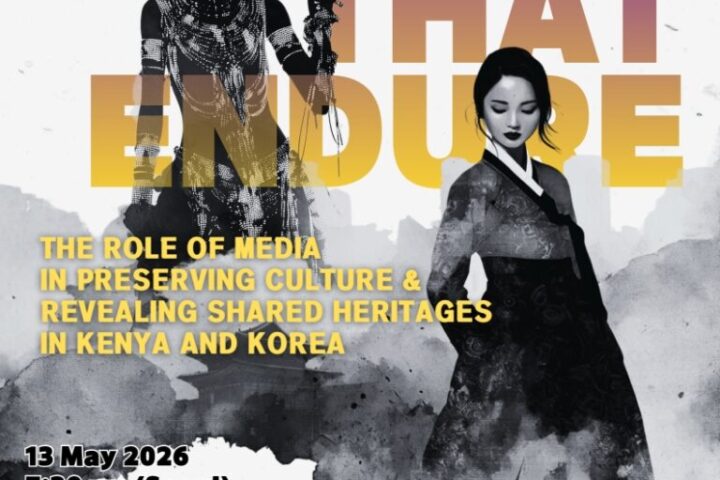
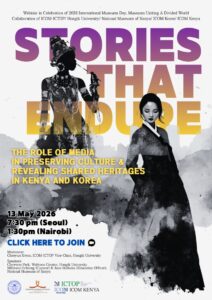
“Stories That Endure”, a webinar organized by ICTOP Vice-Chair and Professor of Hongik University, Cheeyun Kwon (KOREA), in collaboration with the National Museums of Kenya, featured presentations from both countries. Mr. Park Chewoon, a webtoon creator and producer who also teaches at Chung Kang Culture and Industry University in Korea, presented on media content production using traditional Korean cultural heritage, explaining how historical dramas and contemporary content simulate modern desires through traditional cultural frameworks. Curator Millicent Ochieng and Education Officer June Ruthuku, from the National Museums of Kenya, presented their research on shared heritage between Kenya and South Korea, covering four thematic areas including identity, socialization, fieldcraft skills, and divination practices. The presentations highlighted cultural similarities between the two countries, particularly in areas like birth traditions, respect for elders, archery practices, and shamanism, demonstrating how traditional cultural elements can be adapted to resonate with contemporary audiences while preserving cultural heritage.
Summary
Introduction
The webinar “Stories That Endure”, in collaboration between Korea and Kenya, aligns with the theme of the International Museum Day, “Museums Uniting a Divided World”. Prof. Cheeyun Kwon welcomed participants and outlined the event’s structure, which includes presentations by Mr. Park Chaewoon on media content production using cultural heritage, and by Curator Millicent Ochieng and Education Officer June Ruthuku from the National Museums of Kenya on their observations of Korean culture through media. Prof. Kwon also touched on the potential for future collaboration, including recruiting participants for future ICTOP events in Africa.
Content Creation and Brain Processing
Park Chewoon presented on content creation and consumption, exploring how humans process information through simulation. He discussed the concept of content as refined data packets optimized for human brain processing, using road signs and nuclear waste storage facilities as examples. The presentation compared different approaches to warning future generations about radioactive waste, noting that while the WIPP facility in the US used hostile architecture to simulate danger, the Onkalo facility in Finland chose to seal the area with concrete and return it to a normal environment, avoiding potential stimulation of human curiosity and adventure.
Traditional Culture in Media Content
Park Chewoon discussed the use of traditional culture in media content, focusing on how it can address modern societal issues while maintaining acceptability through the MAYA theory. He provided examples of “Spirited Away” and “K-Pop Demon Hunters” to illustrate how traditional elements can be wrapped in familiar narratives to appeal to both domestic and global audiences. Park Chewoon also introduced the concept of recontextualization in historical dramas, explaining how content using Korean traditional culture simulates universal modern anxieties under the visual shell of old Korea, using “Jewel in the Palace” as an example of how traditional culture can address contemporary issues like gender barriers.
Korean Historical Dramas Global Appeal
Park Chewoon presented a comprehensive analysis of Korean historical dramas and their global appeal, examining three key examples: “Dae Jang-geum,” “Bridal Mask,” and “Bon Appetit, Your Majesty.” The presentation explored how these dramas successfully combine traditional Korean culture with modern narratives, creating “exquisite sensory transfer” that resonates with both local and global audiences. Park explained that the success of these works lies in their ability to simulate contemporary anxieties and desires through historical settings, using traditional elements like hanbok, Korean masks, and court culture as vehicles for universal storytelling about survival, achievement, and justice. “Dae Jang-geum,” for example, showcases meritocracy and survival themes that resonate with audiences during challenging times.
Kenyan and Korean Traditions
Millie Ochieng then began presenting on Korea-Kenya Shared Heritage, outlining objectives to identify similarities in life cycle rituals between the two countries and facilitate knowledge exchange between professionals. Millie Ochieng presented on Kenyan cultural practices related to birth, naming, and child protection, drawing parallels with Korean traditions. She explained that in many Kenyan communities, mothers and children are secluded after birth for periods ranging from 4 to 40 days to protect them from evil spirits, similar to practices in Korea where the 100-day celebration marks a critical period of survival. Millie also discussed naming practices, noting that in Kenya children are often named based on season and patrilineal surnames, while in Korea names are carefully chosen to influence luck and future prosperity. The presentation concluded with a discussion of protective measures, including the use of amulets and obnoxious names to ward off evil spirits, with Millie showing examples of traditional protective jewelry worn by Kenyan children.
Cultures of Kenya and Korea
Cultural practices and traditions from Kenya and Korea on socialization, archery, and divination practices were presented by June Ruthuku. June explained Kenyan greeting customs, including handshakes and the use of honorifics when greeting elders, and discussed the historical use of archery for hunting and military purposes in both countries, including the practice of poisoning arrows in Kenya. The discussion also covered shamanic practices in both cultures, noting that shamans in Korea are often women who inherit their roles through lineage, while in Kenya, diviners are consulted for healing and fortune-telling purposes. Cheeyun shared additional insights about archery’s historical significance in Korea, including its role in training nobility and its continued importance as a national sport.
African Contemporary Art in Korea
The discussion focused on the reception and representation of African contemporary art in South Korea, led by a student presenting her master’s thesis research. The presenter sought feedback on whether Western individualistic standards should be applied when analyzing African artists, particularly given the emphasis on communal values in many African societies. Millie shared insights about naming practices in Kenya, explaining how names often reflect seasonal, temporal, or historical contexts across the country’s 40+ communities. The session concluded with participants expressing appreciation for the cultural exchange and discussion.